前言
我用的是最原始的Spring MVC使用方式,基于
项目结构
导入依赖:
spring-webmvc:https://mvnrepository.com/artifact/org.springframework/spring-webmvc
javax.servlet-api:https://mvnrepository.com/artifact/javax.servlet/javax.servlet-api
web.
<web-app> <display-name>Archetype Created Web Application</display-name> <!-- 配置DispatcherServlet --> <servlet> <servlet-name>dispatcherServlet</servlet-name> <servlet-class>org.springframework.web.servlet.DispatcherServlet</servlet-class> <!-- 配置初始化参数 --> <init-param> <param-name>contextConfigLocation</param-name> <param-value>spring-mvc.spring-mvc.
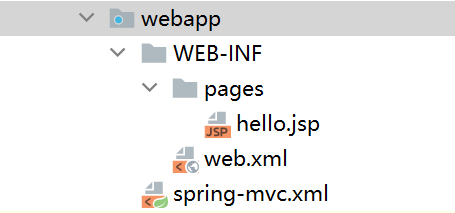
<?webapp文件夹结构:
相关组件
在Spring MVC中,HandlerMapping(处理器映射器)、HandlerAdapter(处理器适配器)、ViewResolver(视图解析器)成为Spring MVC三大组件。
配置<mvc:annotation-driven>标签会自动加载RequestMappingHandlerMapping(处理映射器)和RequestMappingHandlerAdapter(处理适配器),可在Spring MVC的
DispatcherServlet(前端控制器)
作用:接收请求、响应结果。相当于转发器、中央处理器。有了DispatcherServlet就减少了其它组件之间的耦合度。
不需要工程师开发,由框架提供。用户请求到达前端控制器,它就相当于MVC模式中的C(Controller),dispatcherServlet是整个流程控制的中心,由它调用其它组件处理用户的请求,dispatcherServlet的存在降低了组件之间的耦合性。
HandlerMapping(处理器映射器)
作用:根据请求的URL查找Handler。
不需要工程师开发,由框架提供。HandlerMapping负责根据用户请求找到相应的Handler。
SpringMVC提供了不同的映射器实现不同的映射方式:
配置文件的方式。
实现接口的方式。
注解的方式。
HandlerAdapter(处理器适配器)
作用:按照特定规则(HandlerAdapter要求的规则)去执行Handler。
不需要工程师开发,由框架提供。
通过HandlerAdapter对Handler进行执行,这是适配器模式的应用,通过扩展适配器可以对更多类型的Handler进行执行。
Handler(处理器)
作用:处理用户具体的业务请求。
需要工程师开发。Handler是继DispatcherServlet前端控制器的后端控制器,在DispatcherServlet的控制下Handler对具体的用户请求进行处理。
由于Handler涉及到具体的用户业务请求,所以一般情况需要工程师根据业务需求开发Handler。
编写Handler时需要按照HandlerAdapter的要求去做,这样适配器才可以去正确地执行Handler。
ViewResolver(视图解析器)
作用:进行视图解析,根据逻辑视图名解析成真正的View。
不需要工程师开发,由框架提供。ViewResolver负责将处理的结果生成View,ViewResolver首先根据逻辑视图名解析成物理视图名(即具体的页面地址),再生成View对象,最后对View进行渲染并将处理结果通过页面展示给用户。
SpringMVC框架提供了很多的View类型:jstlView、freemarkerView、pdfView等。
View(视图)
需要工程师开发。View是一个接口,实现类支持不同的View类型(Jsp、Freemarker、pdf...)
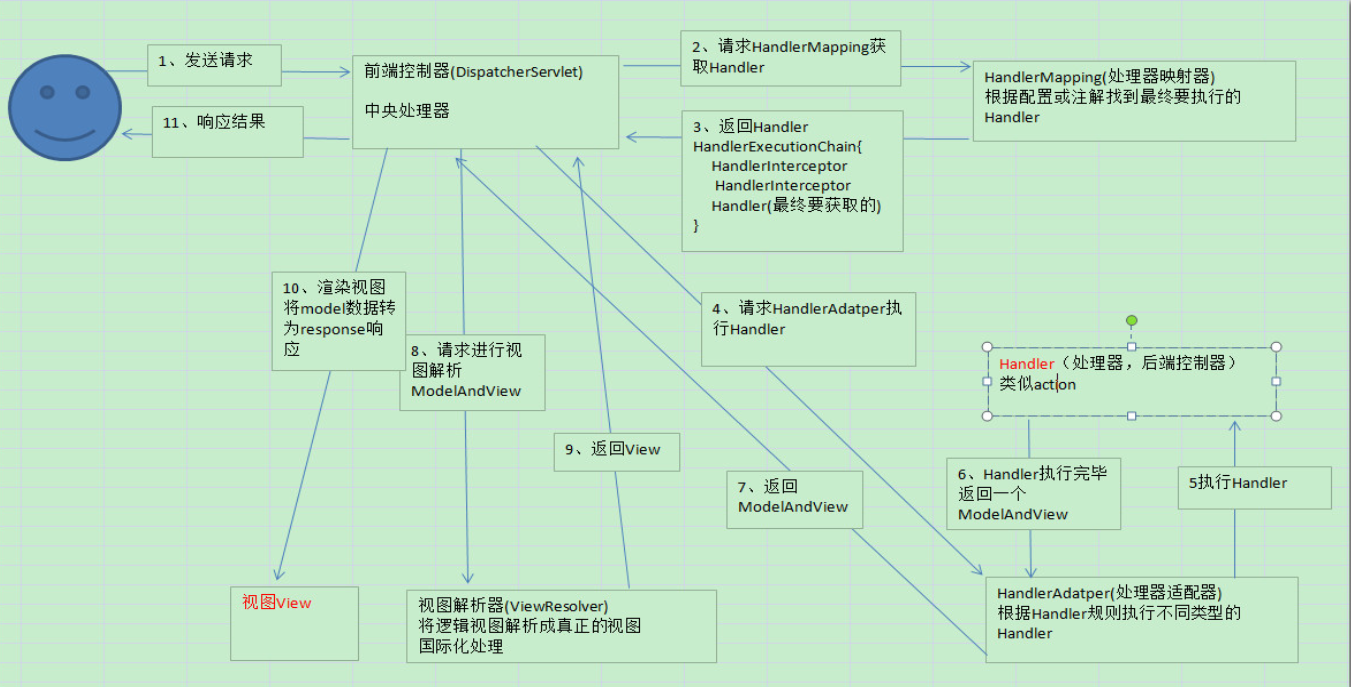
执行流程
Spring MVC是基于组件的方式来执行流程的。
源码分析
源码按Spring MVC的执行流程逐步分析(依照上面的流程图)。
第一步:
根据执行流程的步骤来,请求最先接触的是DispatcherServlet,它是整个Spring MVC的中央控制器。看名字可知它是一个Servlet,我这里没有指定<load-on-startup>参数,则默认是第一次访问时创建,所以当我第一次发送请求时才会创建DispatcherServlet。
既然DispatcherServlet是一个Servlet,我们来回顾一下Servlet的生命周期:
- 初始化:init方法。
- 处理请求:service方法。
- 销毁:destroy方法。
接下来看到DispatcherServlet的初始化init方法,它在间接父类HttpServletBean中,这个方法主要是进行一些最基础内容的初始化,并且提供了initServletBean方法供子类重写,FrameworkServlet类就对该方法进行了重写。
public final void init() throws ServletException { // 设置DispatcherServlet的参数,就是<init-param>标签的内容 PropertyValues pvs = new ServletConfigPropertyValues(getServletConfig(), this.requiredProperties); if (!pvs.isEmpty()) { try { BeanWrapper bw = PropertyAccessorFactory.forBeanPropertyAccess(this); ResourceLoader resourceLoader = new ServletContextResourceLoader(getServletContext()); bw.registerCustomEditor(Resource.class, new ResourceEditor(resourceLoader, getEnvironment())); initBeanWrapper(bw); bw.setPropertyValues(pvs, true); } catch (BeansException ex) { if (logger.isErrorEnabled()) { logger.error("Failed to set bean properties on servlet '" + getServletName() + "'", ex); } throw ex; } } // 子类重写 initServletBean();}接着寻找DispatcherServlet的service方法,它在父类FrameworkServlet中。先是获取请求的HTTP方法,并将其解析为一个HttpMethod对,HttpMethod是Spring MVC对HTTP方法的再封装。随后判断请求是否为PATCH方法,我们这里是GET方法,故进入父类(HttpServlet类)的service方法。
// FrameworkServlet类protected void service(HttpServletRequest request, HttpServletResponse response) throws ServletException, IOException { // 获取请求的HTTP方法 HttpMethod httpMethod = HttpMethod.resolve(request.getMethod()); if (httpMethod == HttpMethod.PATCH || httpMethod == null) { processRequest(request, response); } else { super.service(request, response); }}在HttpServlet类的service方法中,其实也很简单,就是根据不同的HTTP方法进行不同的处理,我们这里进入的是doGet方法。
protected void service(HttpServletRequest req, HttpServletResponse resp) throws ServletException, IOException{ String method = req.getMethod(); if (method.equals(METHOD_GET)) { long lastModified = getLastModified(req); if (lastModified == -1) { // servlet doesn't support if-modified-since, no reason // to go through further expensive logic doGet(req, resp); } else { long ifModifiedSince = req.getDateHeader(HEADER_IFMODSINCE); if (ifModifiedSince < lastModified) { // If the servlet mod time is later, call doGet() // Round down to the nearest second for a proper compare // A ifModifiedSince of -1 will always be less maybeSetLastModified(resp, lastModified); doGet(req, resp); } else { resp.setStatus(HttpServletResponse.SC_NOT_MODIFIED); } } } else if (method.equals(METHOD_HEAD)) { long lastModified = getLastModified(req); maybeSetLastModified(resp, lastModified); doHead(req, resp); } else if (method.equals(METHOD_POST)) { doPost(req, resp); } else if (method.equals(METHOD_PUT)) { doPut(req, resp); } else if (method.equals(METHOD_DELETE)) { doDelete(req, resp); } else if (method.equals(METHOD_OPTIONS)) { doOptions(req,resp); } else if (method.equals(METHOD_TRACE)) { doTrace(req,resp); } else { String errMsg = lStrings.getString("http.method_not_implemented"); Object[] errArgs = new Object[1]; errArgs[0] = method; errMsg = MessageFormat.format(errMsg, errArgs); resp.sendError(HttpServletResponse.SC_NOT_IMPLEMENTED, errMsg); }}然后我们进入FramworkServlet类的doGet方法,里面没有什么逻辑,直接调用了另一个processRequest方法。而processRequest方法我们只需要关注它又调用了子类DispatcherServlet的doServlet方法。
// FrameworkServlet类protected final void doGet(HttpServletRequest request, HttpServletResponse response) throws ServletException, IOException { processRequest(request, response);}protected final void processRequest(HttpServletRequest request, HttpServletResponse response) throws ServletException, IOException { // 省略其他内容... try { // 子类DispatcherServlet实现了该方法 doService(request, response); } catch (ServletException | IOException ex) { failureCause = ex; throw ex; } catch (Throwable ex) { failureCause = ex; throw new NestedServletException("Request processing failed", ex); } finally { resetContextHolders(request, previousLocaleContext, previousAttributes); if (requestAttributes != null) { requestAttributes.requestCompleted(); } logResult(request, response, failureCause, asyncManager); publishRequestHandledEvent(request, response, startTime, failureCause); }}DispatcherServlet进到doService方法,这个方法也只需关注它调用了另一个doDispatch方法。
protected void doService(HttpServletRequest request, HttpServletResponse response) throws Exception { // 省略其他内容... try { // 分派处理请求的组件 doDispatch(request, response); } finally { if (!WebAsyncUtils.getAsyncManager(request).isConcurrentHandlingStarted()) { // Restore the original attribute snapshot, in case of an include. if (attributesSnapshot != null) { restoreAttributesAfterInclude(request, attributesSnapshot); } } if (requestPath != null) { ServletRequestPathUtils.clearParsedRequestPath(request); } }}doDispatch是DispatcherServlet中最重要的方法,这个方法的主要作用是分派处理请求的组件。
// DispatcherServlet类protected void doDispatch(HttpServletRequest request, HttpServletResponse response) throws Exception { HttpServletRequest processedRequest = request; // 处理器执行链 HandlerExecutionChain mappedHandler = null; // 是否为多部分类型请求 boolean multipartRequestParsed = false; // 管理异步请求的处理 WebAsyncManager asyncManager = WebAsyncUtils.getAsyncManager(request); try { // 模型视图对象 ModelAndView mv = null; Exception dispatchException = null; try { // 检查是否需要将当前请求解析为多部分类型请求 processedRequest = checkMultipart(request); // 是否解析为 multipartRequestParsed = (processedRequest != request); // 决定使用哪个Handler来处理当前请求 mappedHandler = getHandler(processedRequest); if (mappedHandler == null) { noHandlerFound(processedRequest, response); return; } // 决定使用哪个处理映射器 HandlerAdapter ha = getHandlerAdapter(mappedHandler.getHandler()); // 获取当前请求的HTTP方法 String method = request.getMethod(); // 如果是GET或HEAD请求,就需要判断资源缓存是否过期 boolean isGet = "GET".equals(method); if (isGet || "HEAD".equals(method)) { long lastModified = ha.getLastModified(request, mappedHandler.getHandler()); if (new ServletWebRequest(request, response).checkNotModified(lastModified) && isGet) { return; } } // 执行过前置拦截器 if (!mappedHandler.applyPreHandle(processedRequest, response)) { return; } // 通过HandlerAdapter执行Handler mv = ha.handle(processedRequest, response, mappedHandler.getHandler()); if (asyncManager.isConcurrentHandlingStarted()) { return; } applyDefaultViewName(processedRequest, mv); // 执行后置拦截器 mappedHandler.applyPostHandle(processedRequest, response, mv); } catch (Exception ex) { dispatchException = ex; } catch (Throwable err) { dispatchException = new NestedServletException("Handler dispatch failed", err); } // 视图解析器解析视图 processDispatchResult(processedRequest, response, mappedHandler, mv, dispatchException); } catch (Exception ex) { triggerAfterCompletion(processedRequest, response, mappedHandler, ex); } catch (Throwable err) { triggerAfterCompletion(processedRequest, response, mappedHandler, new NestedServletException("Handler processing failed", err)); } finally { if (asyncManager.isConcurrentHandlingStarted()) { if (mappedHandler != null) { mappedHandler.applyAfterConcurrentHandlingStarted(processedRequest, response); } } else { if (multipartRequestParsed) { cleanupMultipart(processedRequest); } } }}我们先看到checkMultipart方法,它是用于检查是否需要将当前请求解析为多部分类型请求。先进行一个判断,如果multipartResolver(多部分请求解析器)不存在或者判断当前请求不是多部分类型的请求,就直接退出方法。反之则使用multipartResolver(多部分请求解析器)来解析该请求。
// DispatcherServlet类// 检查是否需要将当前请求解析为多部分类型请求protected HttpServletRequest checkMultipart(HttpServletRequest request) throws MultipartException { // 先判断是否有多部分类型解析器,只有当存在时才会解析当前请求 if (this.multipartResolver != null && this.multipartResolver.isMultipart(request)) { if (WebUtils.getNativeRequest(request, MultipartHttpServletRequest.class) != null) { if (request.getDispatcherType().equals(DispatcherType.REQUEST)) { logger.trace("Request already resolved to MultipartHttpServletRequest, e.g. by MultipartFilter"); } } // 省略其他内容... } return request;}第二步:
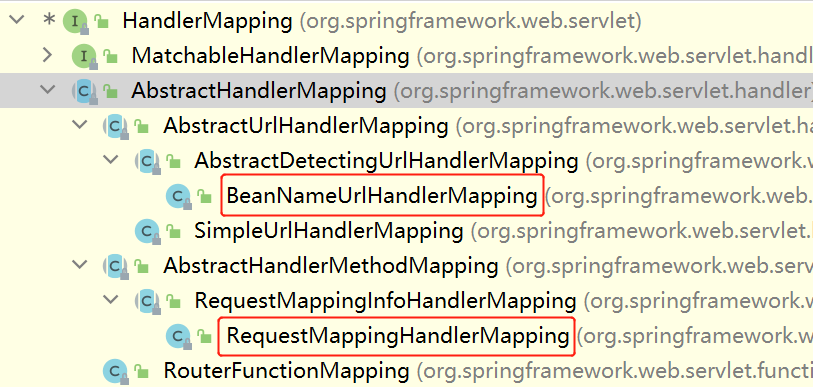
然后走到getHandler方法,第二步就是从该方法开始的。DispatcherServlet类中维护了一个名为handlerMappings的List集合,里面保存了两个默认的HandlerMapping(处理器映射器):一个是RequestMappingHandlerMapping,另个一个是BeanNameUrlHandlerMapping。
RequestMappingHandlerMapping:用来处理通过注解来映射请求的Controller,例如@Controller、@RequestMapping等。
BeanNameUrlHandlerMapping:用来处理通过设置控制器Bean的name为请求URL路径的Controller。
getHandler方法会依次遍历每个HandlerMapping接口,直到某个HandlerMapping能获取到HandlerExecutionChain。因为我是使用注解配置的Controller,所以会使用RequestMappingHandlerMapping实现类。
// DispatcherServlet类protected HandlerExecutionChain getHandler(HttpServletRequest request) throws Exception { if (this.handlerMappings != null) { for (HandlerMapping mapping : this.handlerMappings) { HandlerExecutionChain handler = mapping.getHandler(request); if (handler != null) { return handler; } } } return null;}这里会有点绕!先进到RequestMappingHandlerMapping类间接抽象父类AbstractHandlerMapping的getHandler方法。然后会进入第一行代码的getHandlerInternal方法,这个方法在RequestMappingHandlerMapping类中,但是这方法又去到了父类AbstractHandlerMethodMapping的getHandlerInternal方法中。
HandlerMapping结构入下图所示:
// AbstractHandlerMapping类public final HandlerExecutionChain getHandler(HttpServletRequest request) throws Exception { Object handler = getHandlerInternal(request); if (handler == null) { handler = getDefaultHandler(); } if (handler == null) { return null; } // 省略其他内容... return executionChain;}// RequestMappingHandlerMapping类protected HandlerMethod getHandlerInternal(HttpServletRequest request) throws Exception { request.removeAttribute(PRODUCIBLE_MEDIA_TYPES_ATTRIBUTE); try { return super.getHandlerInternal(request); } finally { ProducesRequestCondition.clearMediaTypesAttribute(request); }}先获取到请求的URL路径,然后通过lookupHandlerMethod方法来寻找Handler方法。
// AbstractHandlerMethodMapping类protected HandlerMethod getHandlerInternal(HttpServletRequest request) throws Exception { // 获取请求URL路径(这里是/hello) String lookupPath = initLookupPath(request); this.mappingRegistry.acquireReadLock(); try { // 根据请求的URL路径寻找Handler中对应的映射方法 HandlerMethod handlerMethod = lookupHandlerMethod(lookupPath, request); return (handlerMethod != null ? handlerMethod.createWithResolvedBean() : null); } finally { this.mappingRegistry.releaseReadLock(); }}暂停一下!这里需要先讲解一下mappingRegistry对象。
先介绍几个跟Handler方法有关的类:
- MappingRegistry:表示映射注册中心。里面保存了所有注册的映射(MappingRegistration)。
- MappingRegistration:表示一个映射。里面存有请求映射信息(RequestMappingInfo)以及映射方法(HandlerMethod)。
- HandlerMethod:表示Handler的一个映射方法。对Handler方法的封装,存有Handler方法的Method对象(用于反射)、方法参数、所在类的Class对象、所在类等信息。
- RequestMappingInfo:存有映射方法的映射信息,其实就是存储的@RequestMapping注解的属性。
public abstract class AbstractHandlerMethodMapping<T> extends AbstractHandlerMapping implements InitializingBean { // Bean init前调用 public void afterPropertiesSet() { initHandlerMethods(); } // 初始化所有Handler方法 protected void initHandlerMethods() { // 获取所有候选Bean然后依次判断是否是Handler Bean for (String beanName : getCandidateBeanNames()) { if (!beanName.startsWith(SCOPED_TARGET_NAME_PREFIX)) { processCandidateBean(beanName); } } // 真正处理Handler方法的初始化 handlerMethodsInitialized(getHandlerMethods()); } // 获取所有候选Bean名称(其实就是IOC容器中所有的Bean的名称) protected String[] getCandidateBeanNames() { // detectHandlerMethodsInAncestorContexts参数默认为false return (this.detectHandlerMethodsInAncestorContexts ? BeanFactoryUtils.beanNamesForTypeIncludingAncestors(obtainApplicationContext(), Object.class) : // 从IOC容器中获取所有Bean(不管是否是Handler Bean)的名称,因为是根据Object类型的Bean obtainApplicationContext().getBeanNamesForType(Object.class)); } // 判断该Bean是否是Handler Bean protected void processCandidateBean(String beanName) { Class<?> beanType = null; try { // 通过Bean名称获取到对应Class对象 beanType = obtainApplicationContext().getType(beanName); } catch (Throwable ex) { // An unresolvable bean type, probably from a lazy bean - let's ignore it. if (logger.isTraceEnabled()) { logger.trace("Could not resolve type for bean '" + beanName + "'", ex); } } // isHandler方法作用就是判断是否为Handler if (beanType != null && isHandler(beanType)) { // 检测Handler中的方法是否为映射方法 detectHandlerMethods(beanName); } } // 省略其他内容... }isHandler方法主要作用是判断某个类是否是Handler(处理器),判断方法很简单,就是判断该类上是否标有@Controller或@RequestMapping注解。
// RequestMappingHandlerMapping类protected boolean isHandler(Class<?> beanType) { return (AnnotatedElementUtils.hasAnnotation(beanType, Controller.class) || AnnotatedElementUtils.hasAnnotation(beanType, RequestMapping.class));}detectHandlerMethods方法用来检测该指定Handler中的方法有哪些是映射方法,并将映射方法注册到一个名为mappingRegistry的Map集合中,其中Key为RequestMappingInfo,Value为MappingRegistration。
protected void detectHandlerMethods(Object handler) { // 获取Handler的Class对象 Class<?> handlerType = (handler instanceof String ? obtainApplicationContext().getType((String) handler) : handler.getClass()); if (handlerType != null) { Class<?> userType = ClassUtils.getUserClass(handlerType); // 筛选映射方法并存入Map集合中 Map<Method, T> methods = MethodIntrospector.selectMethods(userType, (MethodIntrospector.MetadataLookup<T>) method -> { try { return getMappingForMethod(method, userType); } catch (Throwable ex) { throw new IllegalStateException("Invalid mapping on handler class [" + userType.getName() + "]: " + method, ex); } }); if (logger.isTraceEnabled()) { logger.trace(formatMappings(userType, methods)); } // 将所有的映射方法处理后存入另一个Map集合中 methods.forEach((method, mapping) -> { Method invocableMethod = AopUtils.selectInvocableMethod(method, userType); // 注册进mappingRegistry集合中 registerHandlerMethod(handler, invocableMethod, mapping); }); }}// 注册Handler的映射方法protected void registerHandlerMethod(Object handler, Method method, T mapping) { this.mappingRegistry.register(mapping, handler, method);}// AbstractHandlerMethodMapping内部类MappingRegistry类public void register(T mapping, Object handler, Method method) { this.readWriteLock.writeLock().lock(); try { HandlerMethod handlerMethod = createHandlerMethod(handler, method); validateMethodMapping(handlerMethod, mapping); // 省略其他内容... // 将一个映射存入映射注册中心 this.registry.put(mapping, new MappingRegistration<>(mapping, handlerMethod, directPaths, name)); } finally { this.readWriteLock.writeLock().unlock(); }}回到上面的lookupHandlerMethod方法,这里主要是通过请求的URL寻找对应的Handler映射方法。
Match:一个包装类,里面存有与请求匹配的RequestMappingInfo和对应的HandlerMethod。
// AbstractHandlerMethodMapping类protected HandlerMethod lookupHandlerMethod(String lookupPath, HttpServletRequest request) throws Exception { // 存有与请求匹配的所有Match对象的集合 List<Match> matches = new ArrayList<>(); // 根据当前请求的URL获取所有对应的RequestMappingInfo对象的集合 List<T> directPathMatches = this.mappingRegistry.getMappingsByDirectPath(lookupPath); // 在RequestMappingInfo对象的集合中再筛选出符合请求参数条件的,然后封装成Match添加至matches集合中 if (directPathMatches != null) { addMatchingMappings(directPathMatches, matches, request); } if (matches.isEmpty()) { addMatchingMappings(this.mappingRegistry.getRegistrations().keySet(), matches, request); } if (!matches.isEmpty()) { // 使用第一个匹配的Match对象 Match bestMatch = matches.get(0); // 处理多个Match的情况 if (matches.size() > 1) { Comparator<Match> comparator = new MatchComparator(getMappingComparator(request)); matches.sort(comparator); bestMatch = matches.get(0); if (logger.isTraceEnabled()) { logger.trace(matches.size() + " matching mappings: " + matches); } if (CorsUtils.isPreFlightRequest(request)) { return PREFLIGHT_AMBIGUOUS_MATCH; } Match secondBestMatch = matches.get(1); if (comparator.compare(bestMatch, secondBestMatch) == 0) { Method m1 = bestMatch.handlerMethod.getMethod(); Method m2 = secondBestMatch.handlerMethod.getMethod(); String uri = request.getRequestURI(); throw new IllegalStateException( "Ambiguous handler methods mapped for '" + uri + "': {" + m1 + ", " + m2 + "}"); } } request.setAttribute(BEST_MATCHING_HANDLER_ATTRIBUTE, bestMatch.handlerMethod); handleMatch(bestMatch.mapping, lookupPath, request); return bestMatch.handlerMethod; } else { return handleNoMatch(this.mappingRegistry.getRegistrations().keySet(), lookupPath, request); }}private void addMatchingMappings(Collection<T> mappings, List<Match> matches, HttpServletRequest request) { // 遍历当前请求URL所对应的所有HandlerMapping for (T mapping : mappings) { // 判断该HandlerMapping是否与当前请求所有参数都匹配,因为并不是通过URL获取的HandlerMapping都是符合要求的,请求还有其他的限制条件 T match = getMatchingMapping(mapping, request); // 将匹配的HandlerMapping与对应的HandlerMethod封装成一个Match对象,然后添加至matches集合中 if (match != null) { matches.add(new Match(match, this.mappingRegistry.getRegistrations().get(mapping).getHandlerMethod())); } }}第三步:
随后我们再次回到之前的getHandler方法中,通过getHandlerExecutionChain方法获取了一个包含Handler方法以及多个HandlerInterceptor(处理器拦截器)的HandlerExecutionChain(处理器执行链)。这里面涉及到一个类叫MappedInterceptor,这是映射拦截器,它带有路径模式匹配的HandlerInterceptor,也提供了匹配逻辑来测试拦截器是否适用于一个给定的请求路径。MappedInterceptor类被final关键字修饰,无法被继承,因此大多数的拦截器是否都是存在它内部,比如默认情况下Spring MVC会提供一个ConversionServiceExposingInterceptor(类型转换拦截器)并存入一个MappedInterceptor中,而所有的拦截器又会存储在AbstractHandlerMapping类的adaptedInterceptors集合中。
// AbstractHandlerMapping类public final HandlerExecutionChain getHandler(HttpServletRequest request) throws Exception { Object handler = getHandlerInternal(request); // 省略其他内容... HandlerExecutionChain executionChain = getHandlerExecutionChain(handler, request); // 日志打印 if (logger.isTraceEnabled()) { logger.trace("Mapped to " + handler); } else if (logger.isDebugEnabled() && !request.getDispatcherType().equals(DispatcherType.ASYNC)) { logger.debug("Mapped to " + executionChain.getHandler()); } // 判断是否要处理跨域问题 if (hasCorsConfigurationSource(handler) || CorsUtils.isPreFlightRequest(request)) { CorsConfiguration config = getCorsConfiguration(handler, request); if (getCorsConfigurationSource() != null) { CorsConfiguration globalConfig = getCorsConfigurationSource().getCorsConfiguration(request); config = (globalConfig != null ? globalConfig.combine(config) : config); } if (config != null) { config.validateAllowCredentials(); } executionChain = getCorsHandlerExecutionChain(request, executionChain, config); } return executionChain;}// 获取处理器执行链protected HandlerExecutionChain getHandlerExecutionChain(Object handler, HttpServletRequest request) { // 初始化处理器执行链 HandlerExecutionChain chain = (handler instanceof HandlerExecutionChain ? (HandlerExecutionChain) handler : new HandlerExecutionChain(handler)); // 遍历adaptedInterceptors集合中的拦截器,依次添加进HandlerExecutionChain的interceptorList集合中 for (HandlerInterceptor interceptor : this.adaptedInterceptors) { if (interceptor instanceof MappedInterceptor) { MappedInterceptor mappedInterceptor = (MappedInterceptor) interceptor; if (mappedInterceptor.matches(request)) { chain.addInterceptor(mappedInterceptor.getInterceptor()); } } else { chain.addInterceptor(interceptor); } } return chain;}谈谈这个HandlerExecutionChain,该类里面存储了Handler方法以及装有对应拦截器的List集合,还有前置处理方法、后置处理方法和完成触发方法。
public class HandlerExecutionChain { private static final Log logger = LogFactory.getLog(HandlerExecutionChain.class); // Handler方法 private final Object handler; // 拦截器 private final List<HandlerInterceptor> interceptorList = new ArrayList<>(); private int interceptorIndex = -1; // 省略其他内容... boolean applyPreHandle(HttpServletRequest request, HttpServletResponse response) throws Exception { for (int i = 0; i < this.interceptorList.size(); i++) { HandlerInterceptor interceptor = this.interceptorList.get(i); if (!interceptor.preHandle(request, response, this.handler)) { triggerAfterCompletion(request, response, null); return false; } this.interceptorIndex = i; } return true; } void applyPostHandle(HttpServletRequest request, HttpServletResponse response, @Nullable ModelAndView mv) throws Exception { for (int i = this.interceptorList.size() - 1; i >= 0; i--) { HandlerInterceptor interceptor = this.interceptorList.get(i); interceptor.postHandle(request, response, this.handler, mv); } } void triggerAfterCompletion(HttpServletRequest request, HttpServletResponse response, @Nullable Exception ex) { for (int i = this.interceptorIndex; i >= 0; i--) { HandlerInterceptor interceptor = this.interceptorList.get(i); try { interceptor.afterCompletion(request, response, this.handler, ex); } catch (Throwable ex2) { logger.error("HandlerInterceptor.afterCompletion threw exception", ex2); } } }}原文转载:http://www.shaoqun.com/a/501288.html
心怡科技:https://www.ikjzd.com/w/1327
catch:https://www.ikjzd.com/w/832
蜜芽宝贝:https://www.ikjzd.com/w/1320
前言我用的是最原始的SpringMVC使用方式,基于项目结构导入依赖:spring-webmvc:https://mvnrepository.com/artifact/org.springframework/spring-webmvcjavax.servlet-api:https://mvnrepository.com/artifact/javax.servlet/javax.servlet-ap
打折网站:打折网站
中国邮政邮乐网:中国邮政邮乐网
佛山到金沙洲万达摩天轮怎么走?金沙洲万达广场摩天轮自驾车路:佛山到金沙洲万达摩天轮怎么走?金沙洲万达广场摩天轮自驾车路
【新西兰旅游必备品】--新西兰旅游攻略:【新西兰旅游必备品】--新西兰旅游攻略
花一百万购买一个Shopify独立站是一种什么体验?:花一百万购买一个Shopify独立站是一种什么体验?

没有评论:
发表评论